
Why an agentic CDP beats a plain MCP server
More and more often an AI agent, not a person, operates the customer data platform. Sero CDP has an agent of its own and a conversational API: your agent asks, Ron operates the platform and delivers the answer.
 Danny de KruijkProduct Lead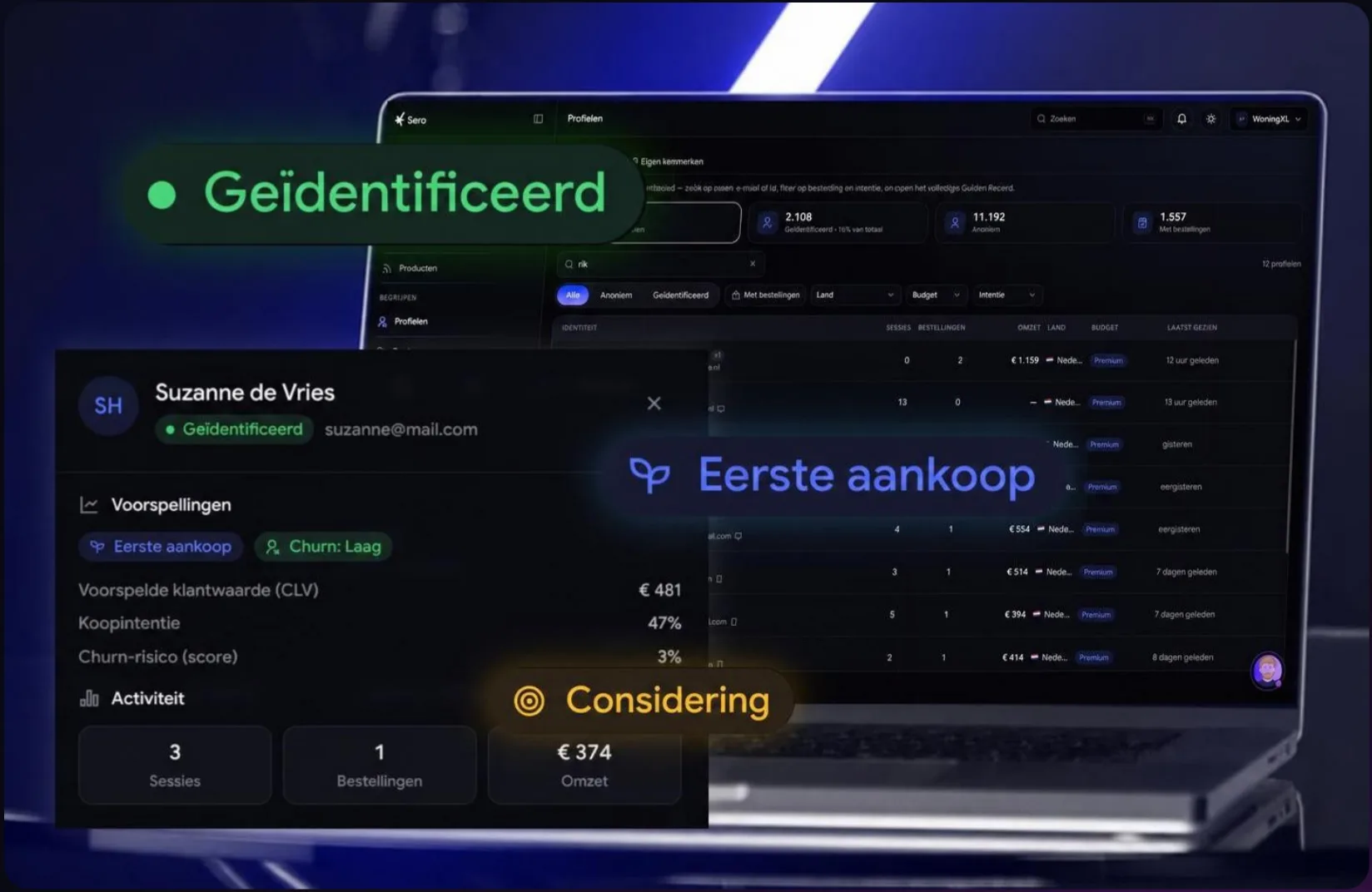
For years, a customer data platform was something you operated through dashboards. You clicked a segment together, exported a list and put it to work somewhere else. That model is running out of road. More and more teams are handing that work to an AI agent, and at that point a dashboard turns out to be exactly the wrong interface.
That is why Sero CDP was built to be agentic from the ground up. Not as a chat window bolted onto the product, but as a second way to operate the entire platform: in plain language, by an agent, with the same permissions and the same boundaries as a person.
From dashboard to conversation
The question a marketer asks is rarely a query. It is something like: which customers bought a garden set in the spring but nothing since, and what is their average order value? In a classic CDP you translate that yourself into filters, segments and exports.
In Sero CDP you ask it literally. The platform has an agent of its own, Ron, who does the translating: he works out which data is needed, retrieves it within the boundaries of your workspace and returns an answer. No intermediate step, no export, no second tool.
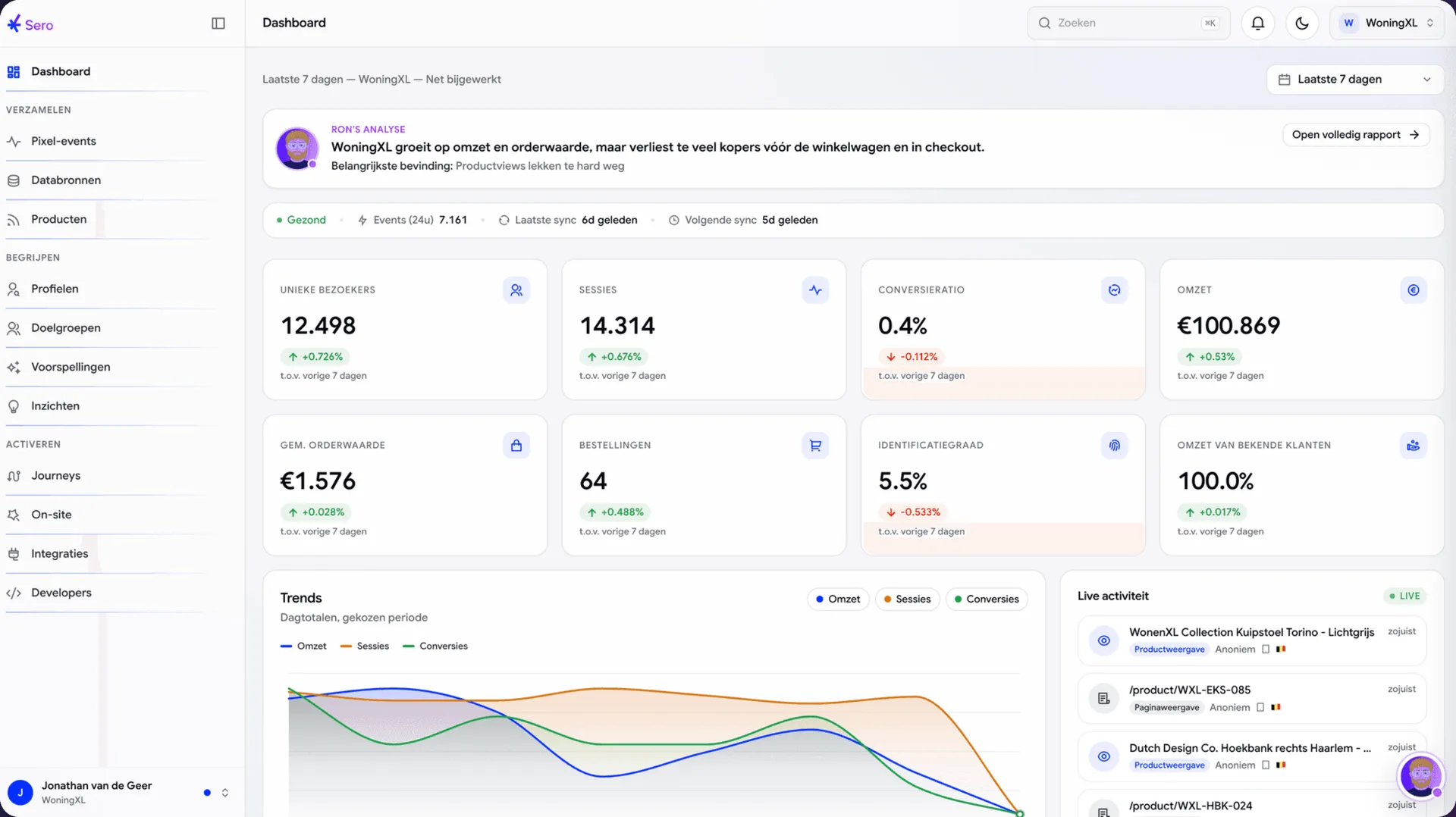
Your agent asks, Ron does the work
The interesting part starts the moment you connect an agent of your own. Whether you work in Claude Code, Codex or your own script, that agent does not have to learn the CDP. It puts its question to Ron.
Ron then works out which data is needed, queries the platform, assesses the result and returns only the answer. The raw rows stay where they belong. Your agent gets exactly the information it needs to move on, and nothing more.
Why that matters
An agent that has to dig through raw customer data pays for it in tokens, in time and in mistakes. A single profile is easily hundreds of lines. An answer to a question is one paragraph. That difference decides whether an agent is a nice demo or something you can rely on every day.
More efficient than an MCP server
The common way to connect an AI agent to a system is an MCP server. It exposes the underlying functions and leaves the thinking to the agent. That works, but it puts the heavy lifting in the wrong place.
Two ways to connect an agent
- A plain MCP server
- Your agent learns the data model, picks endpoints itself, pulls raw data and processes it. Every question costs several rounds and a serious amount of context.
- The Sero agentic API
- Your agent asks one question in plain language. Ron already knows the data model, operates the platform and returns a finished answer.
The difference is not only efficiency. An agent that never had to learn the data model keeps working when that data model changes. The knowledge of how Sero CDP fits together sits with Ron. Your agent concerns itself with what you want to do.
Connecting it in practice
You create a key in the dashboard with exactly the rights you want to hand out. Then one command pulls in the skill, and your agent knows how Sero CDP works. No MCP server required, and no integration to build.
Installing it in Claude Code
mkdir -p ~/.claude/skills/sero-cdp && curl -s https://cdp.sero.tech/api/v1/skill.md -o ~/.claude/skills/sero-cdp/SKILL.md
From that moment your agent can read and change the workspace. Pull profiles, orders, products, events, sessions, audiences, journeys and KPIs. Write events, profile traits, orders and products. Create an audience that is materialized right away. And create or activate a journey, behind the same checks that apply in the dashboard.
That list is growing fast. What is a click in the dashboard today is moving under the agent step by step: setting up widgets and personalizations, running experiments, building product sets and pushing audiences straight to advertising platforms.
Ron reads, your agent writes
That split is a design choice. Through the API, Ron is strictly read-only. He answers questions about your data but changes nothing. If you want something changed, your agent makes an explicit, deterministic call. That way a language model can never talk something into breaking.
Three layers of isolation sit underneath. The workspace always comes from the key, never from a header or a request body. Every query passes a check that reads how it is built and refuses anything that is not strictly read-only and not bound to your workspace. And the database itself uses a separate role that returns zero rows without the right context.
On top of that there is a rate limit per key, writes are idempotent, and the dashboard shows a log of every call an agent has made. Agentic does not mean less control here. It means the control sits in one place.
The tools reinforce each other
Sero CDP does not stand on its own. The other Sero products feed the profile and draw on it at the same time.
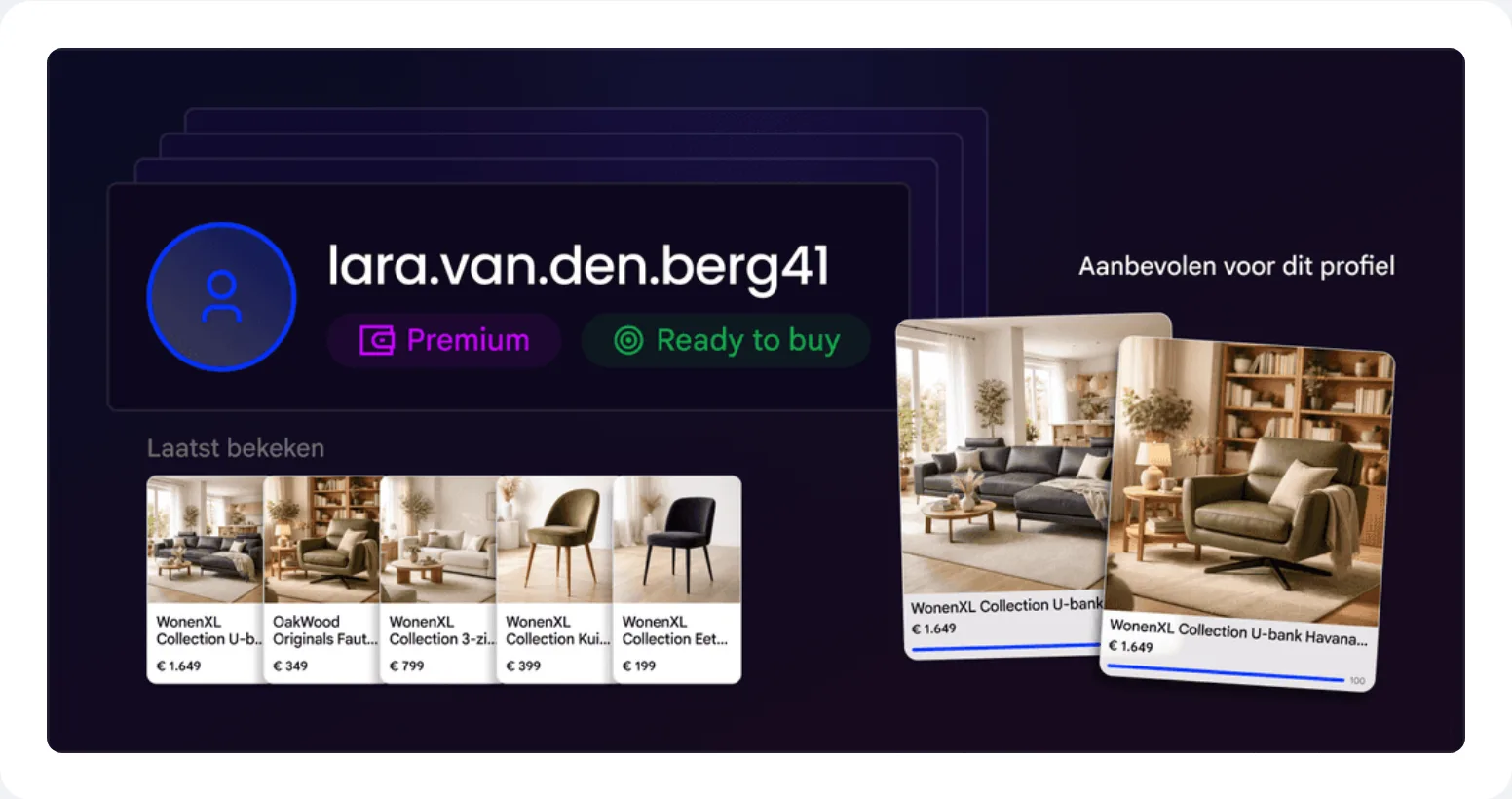
A conversation with Sero Shopping Assistant reveals what someone is after: the number of people, the material, the budget. That is intent you will not find anywhere in an order history, and it enriches the profile in the CDP.
What someone types into Sero Search tells the same story from the other side. Searches without results are demand with no supply behind it yet, and that is useful for range planning as well as for targeting.
And when a visitor views a product in their own space through Sero Try Before You Buy, that is one of the strongest buying signals you get online. Someone who takes the trouble to place a sofa in their own living room is further along than someone who scrolls three pages.
The traffic runs both ways. The tools send their events to the CDP, where they are immediately usable in audiences and journeys. In the other direction, each tool pulls the profile it is working with, so what someone did earlier weighs into the order of the search results, into the assistant’s advice and into what appears on the product page.
All of those signals come together on one profile. Sero CDP spots what follows from them, the rest of the stack acts on it: a different message on the site, a different moment in email, a different audience in advertising.
Built for the years ahead
The shift now getting under way is that the daily operator of the system is no longer a person but an agent. Anyone building on that does not want an integration that has to be rewritten with every model swap or schema change.
That is why, at Sero, the intelligence sits on the platform side. Ron knows the data model, guards the permissions and delivers answers. Your agent, whichever one it is, only has to know what it wants to ask.
More insights
 Case · Connected AI stackHow Kees Smit is building one connected AI stack for the entire customer journeyKees Smit Tuinmeubelen connects content production, product advice and service in one AI stack built on Sero CDP. On the product page, smart widgets now answer 30,000 questions a month.
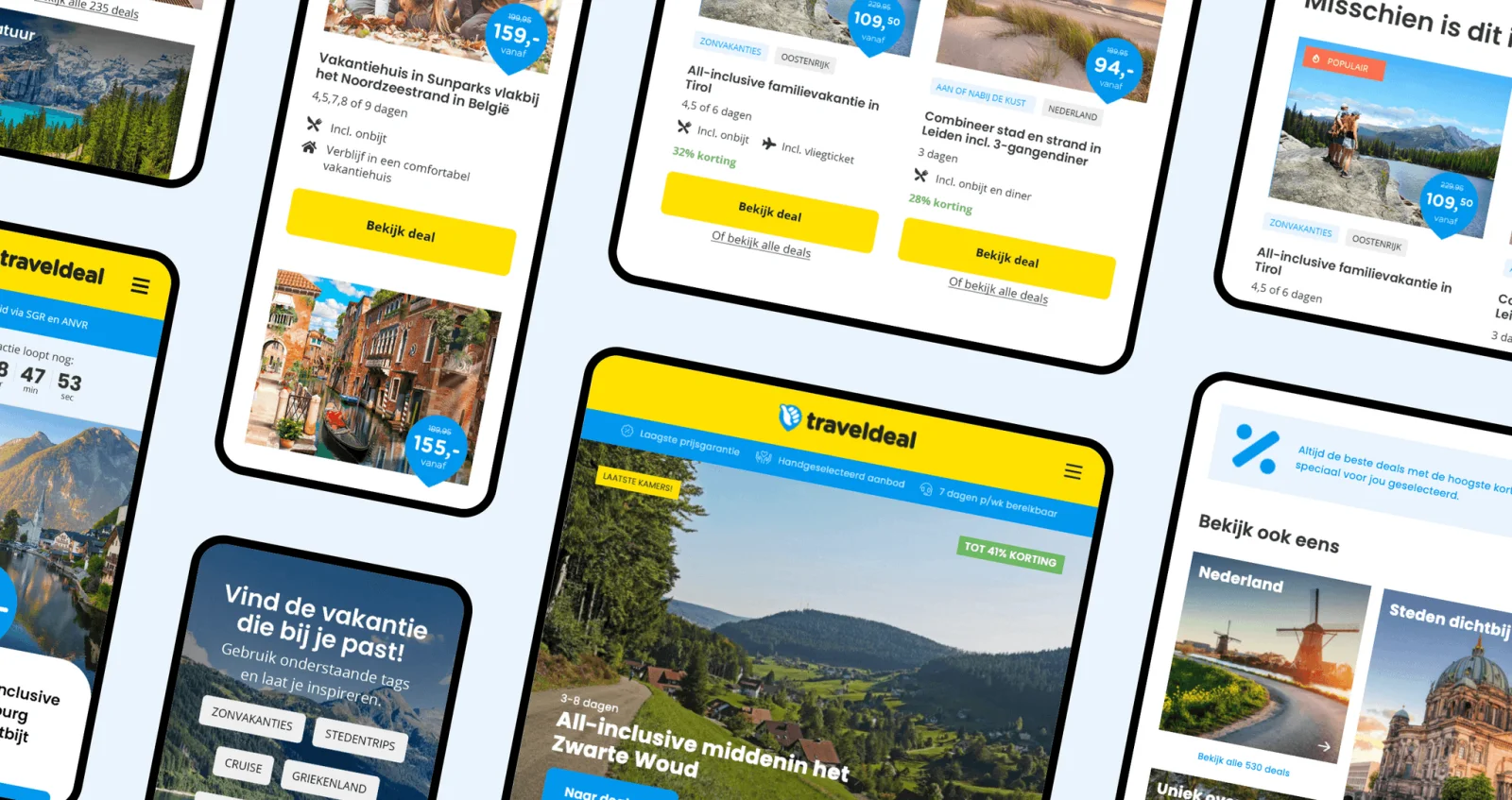 Case · PersonalizationHow Traveldeal increased conversion by 20%Traveldeal made one travel offering relevant to different types of travelers. AI personalization gave every visitor content that matched their own plans — without maintaining dozens of separate pages.
 Case · Fashion contentHow N BRANDS makes fashion content faster, more creative and scalableN BRANDS wanted to reduce its dependence on costly model shoots. Sero Fashion made production more efficient, but the bigger gain was a faster, freer and more scalable creative workflow, from the first garment idea to campaign imagery.