
Findability in 2027: do you know whether AI recommends you?
Try a simple test today. Ask ChatGPT, Gemini or Claude where to buy what you sell.
 Rik van den WijngaardChief Strategy
Not with your brand name in it, but the way a customer who doesn’t know you yet would ask: “Where can I buy a good lounge set for a small balcony?” Chances are your competitor shows up, complete with an explanation and advice. Meanwhile you’re sitting neatly in position seven in Search Console.
Most online stores have no idea what that answer looks like. And those who do usually don’t know whether what they’re doing about it actually works. That’s what this piece is about.
AI only knows you once your customer already does
This summer, 28 Dutch online stores were measured on how often ChatGPT and Google AI mention them, across almost 3,000 answers. When the brand name was in the question, the store appeared in 84 percent of cases. But for a regular category question without a brand name, that dropped to around 17 percent. The median store got no further than 9 percent. And 10 of the 28 were never mentioned for a category question at all.
So AI finds you just fine when someone is already looking for you. But at the moment a new customer makes a choice, you’re not there.
That’s the difference between being found and being recommended. A search engine gave you a list of ten. An AI assistant like ChatGPT, Gemini or Claude gives one or two names, with a reason attached. That’s where you want to be.
Where AI forms its opinion
This is the surprise for many e-commerce teams: your own site is only part of the story. In the same study, a fifth of the sources ChatGPT used for online stores came from review platforms. On top of that, Reddit and Instagram. And in seven out of ten answers, a store was mentioned without any source at all.
So AI forms an opinion about you in places where you don’t have a page yourself. That’s GEO, generative engine optimization, in one sentence: making sure AI finds enough good, consistent signals about you to recommend you.
In practice, that takes:
- category pages that answer real buying questions, not just show products;
- product and company data a machine can read: structured data, current delivery times, clear return policies;
- reviews and company details that tell the same story everywhere;
- mentions in the places AI draws its sources from;
- a site that doesn’t accidentally lock out AI bots. That happens more often than you’d think, through a hosting or firewall setting nobody consciously chose.
It’s not a budget game
The good news: this can be shifted, and not only by the biggest players.
A Dutch tile store is mentioned in 29 percent of answers to category questions, well above average. Orders from AI traffic there have more than tripled.
A small fashion store selling luxury children’s clothing wasn’t mentioned when someone asked Gemini for advice. Its competitors had machine-readable product data; this store didn’t. Once that data was fixed, the store was the first recommendation for a question about luxury children’s clothing in the region.
And a niche store selling personalized gifts appeared in Gemini above the big marketplaces, for a question where only those marketplaces had been mentioned before.
None of the three has a big media budget. What they do have is expertise in their niche and data that’s in order. On this playing field, the specialist can beat the generalist.
The problem with most GEO results
Now for the honest part. Many GEO results you come across rest on a screenshot of one question on one day. But AI answers change. Ask the same question tomorrow and you get a different list. And if you publish content without a baseline, eight weeks later you won’t know whether it worked or whether it was luck.
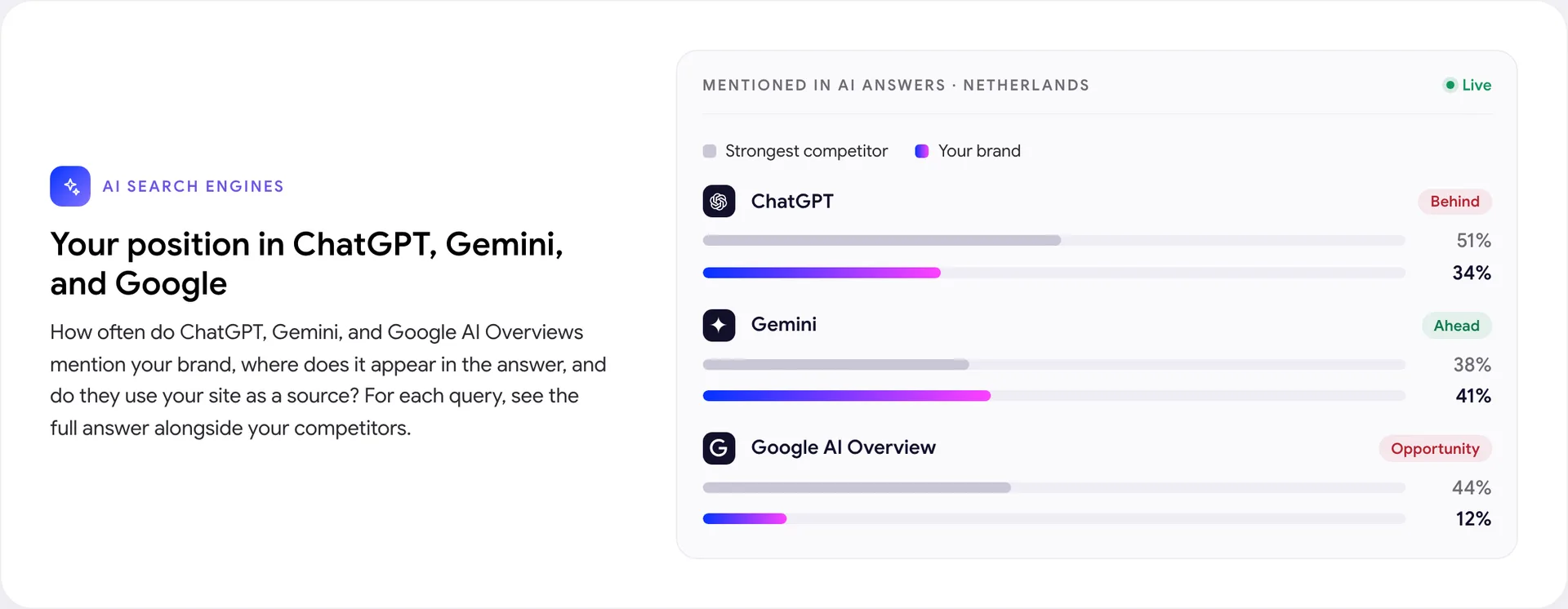
That’s why we built Sero Reach with honest measurement at its core. Every week, Reach asks ChatGPT, Gemini, Claude and Google the questions your customers ask, in your website’s language and region. Not one question, but per topic and alongside your competitors. For every number you see the source and the margin, and whether it was measured or estimated.
Where you’re behind, there’s an opportunity. Joost, the AI agent in Reach, first looks at what you already have. If there’s already a page, he improves it. Otherwise he writes a new one, in your own brand voice. Reach publishes straight to your CMS and records a baseline. After eight weeks, Reach measures again and tells you what happened. Even if it achieved nothing, or made things worse.
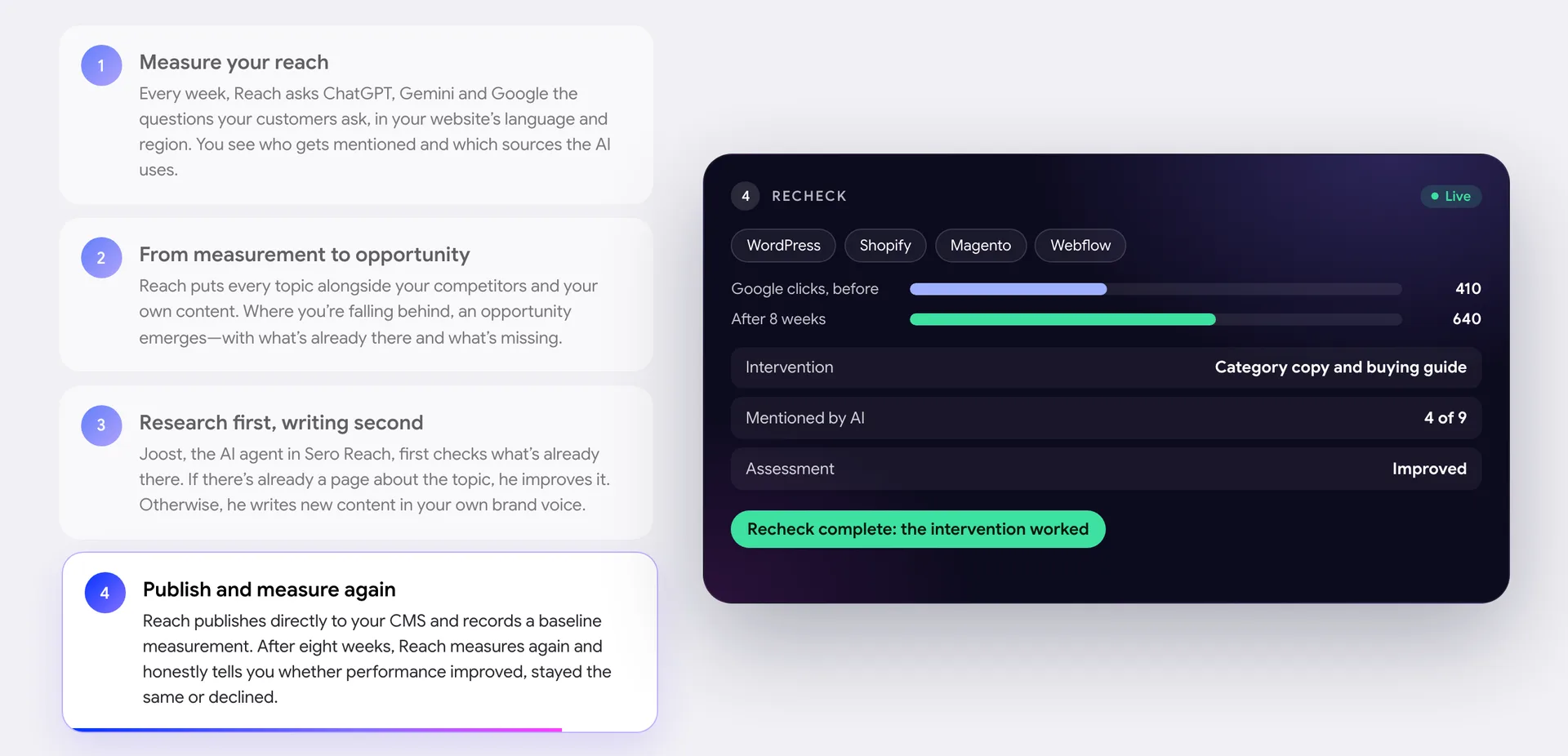
That last part is what it’s all about. It’s the difference between making content and knowing what content delivers.
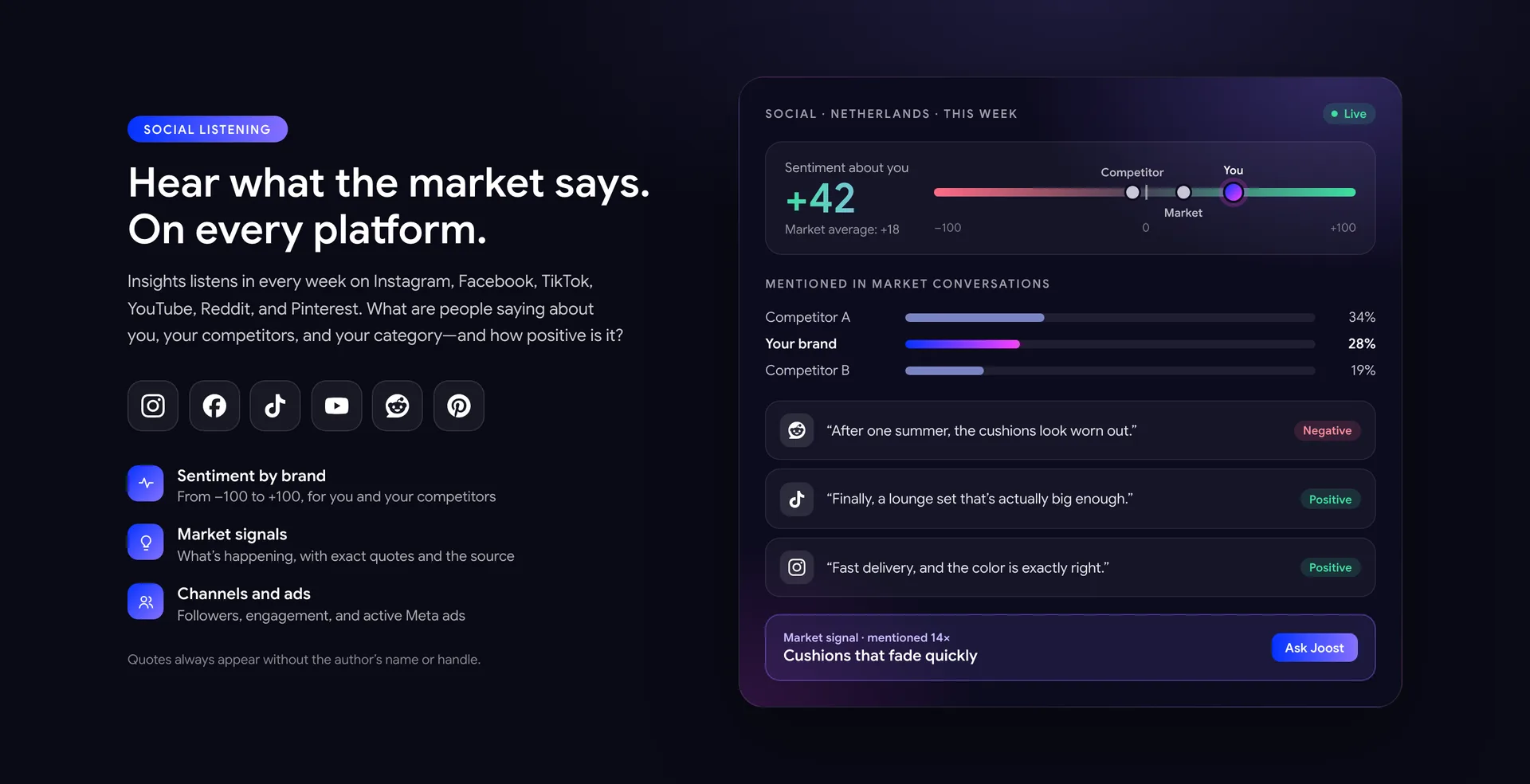
And because AI also forms its opinion on social, Reach listens in there too: Instagram, TikTok, Reddit, YouTube and more. What are people saying about you and your competitors, and which complaint keeps coming back?
Write for your best customer, not for every click
Fewer clicks means every click counts for more. With Sero CDP underneath, Reach knows which categories attract your most valuable customers. So you put your energy into the topics that drive revenue, not the ones that only drive traffic.
In short
Findability in 2027 isn’t your position on a list. It’s whether you get mentioned at the moment a new customer asks for advice. Start with today’s test. And if you want to know whether you’re getting better at it week after week, measure it honestly.
In a demo we show you how often ChatGPT, Gemini, Claude and Google mention your brand right now, and where your biggest opportunity lies. Book your free demo.
More insights
 Case · Connected AI stackHow Kees Smit is building one connected AI stack for the entire customer journeyKees Smit Tuinmeubelen connects content production, product advice and service in one AI stack built on Sero CDP. On the product page, smart widgets now answer 30,000 questions a month.
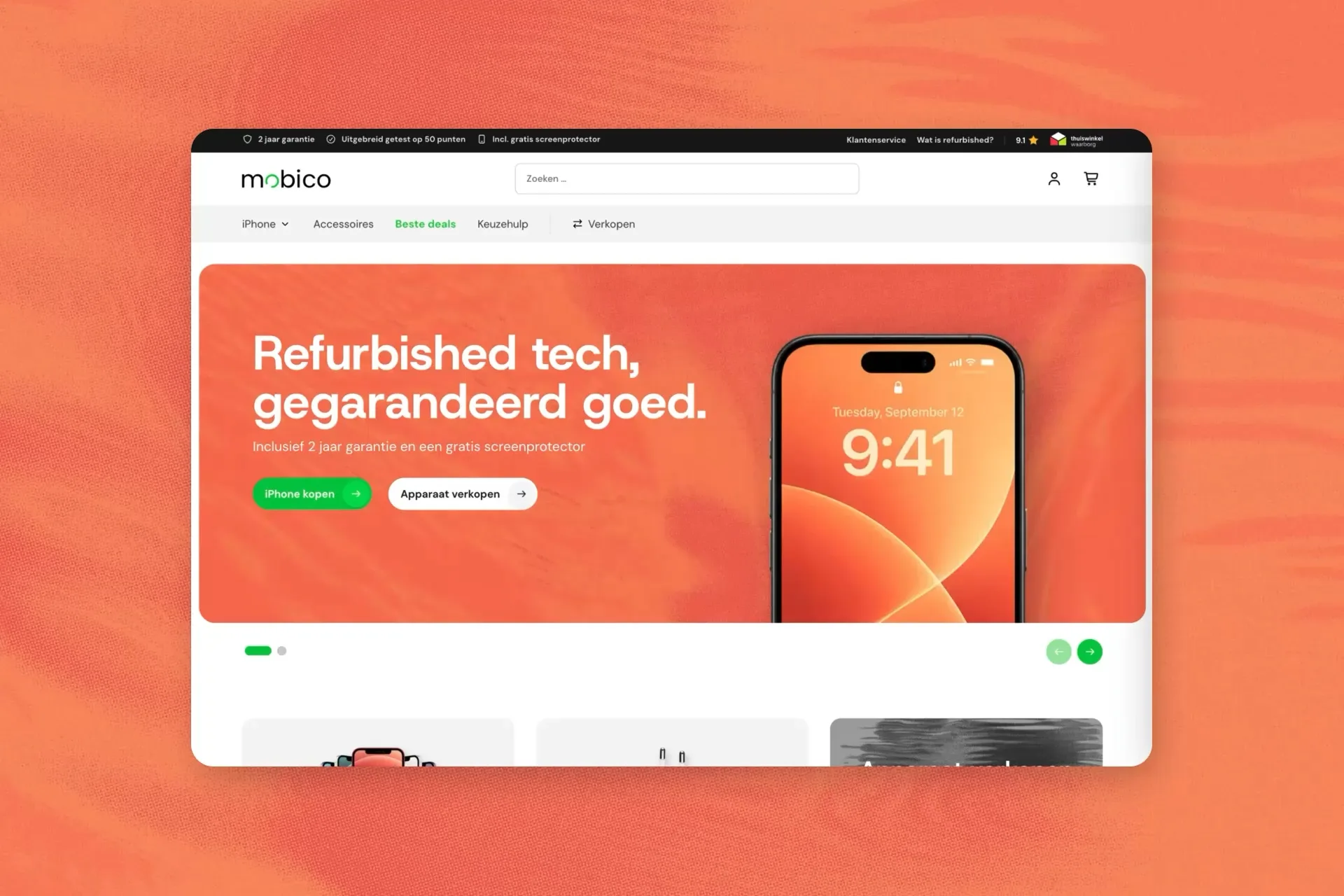 Case · Data & personalizationHow Mobico brings data, AI and personalization togetherWith Sero CDP, Shopping Assistant and Support Agent, refurbished iPhone specialist Mobico connects customer data with AI and personalization. Every interaction becomes input for a more relevant next one.
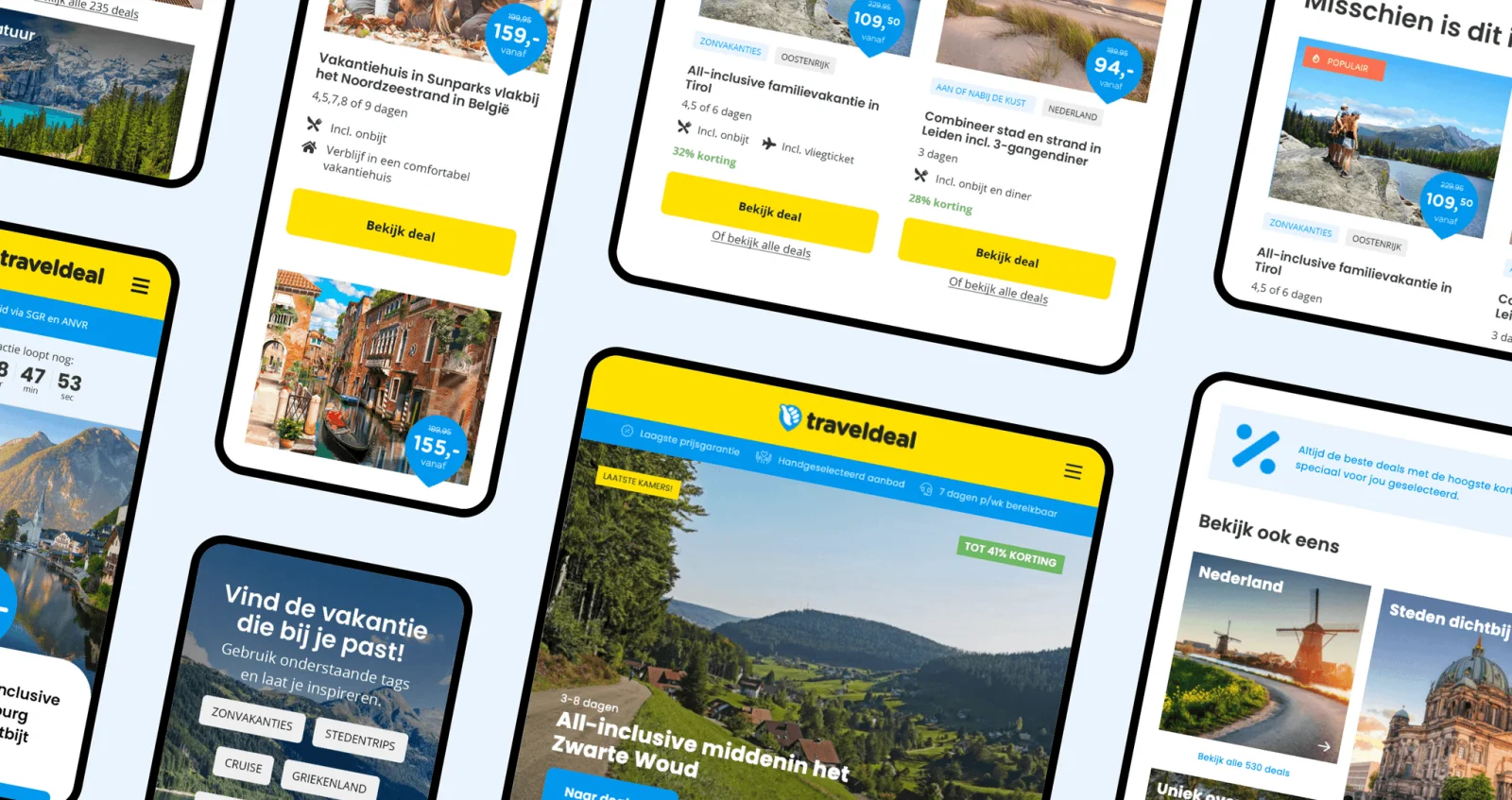 Case · PersonalizationHow Traveldeal increased conversion by 20%Traveldeal made one travel offering relevant to different types of travelers. AI personalization gave every visitor content that matched their own plans — without maintaining dozens of separate pages.