Back
More Variety, Less Cost: The success of 247Jeans with Sero Fashion
08 minutes
Fashion
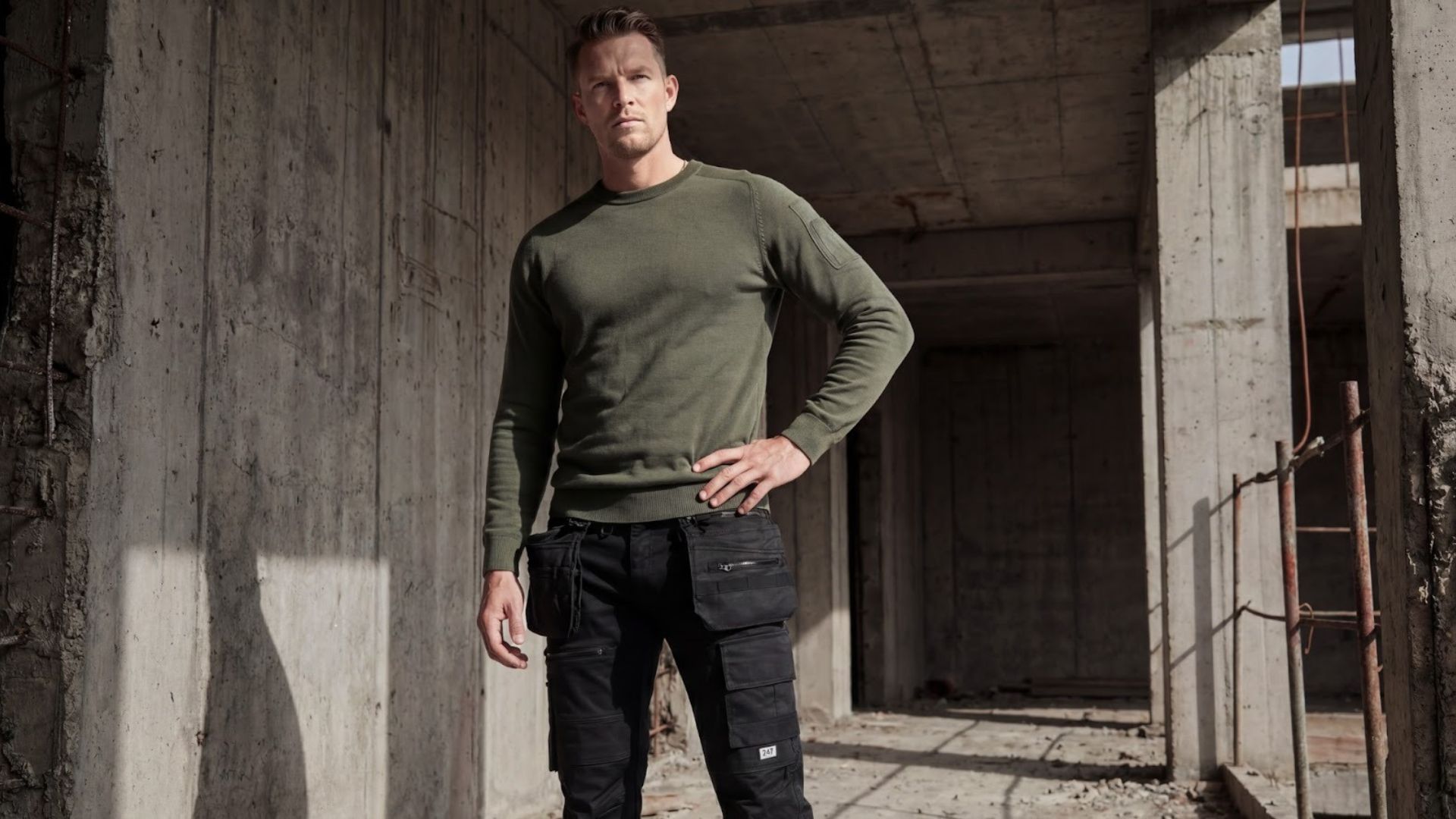

247Jeans photoshoots used AI technology to produce article content for their webshop and sales channels more quickly and cost-effectively. As a pilot customer of Sero Fashion, the brand transitioned from traditional studio shoots to a hybrid model in which AI-generated images take over a large part of the work. The result: shorter lead times, lower costs, and greater scalability without compromising brand identity.
Gideon was the driving force behind 247Jeans and saw a lot of potential in AI-generated photoshoots. He has been working at 247Jeans as a content marketer for almost four years and previously gained extensive experience in the TV world. With that background in (moving) images, he could accurately assess whether the quality of Sero Fashion aligned with the standards of 247Jeans.
In this article, you will discover how 247Jeans implemented this virtual photoshoot workflow. You will learn about the steps they took, which tools they use, and how they utilize prompt engineering to create on-brand content. You will also gain insight into the ROI considerations and concrete learnings you can directly apply in your e-commerce content production.
Quick facts: what 247Jeans wanted to achieve and why
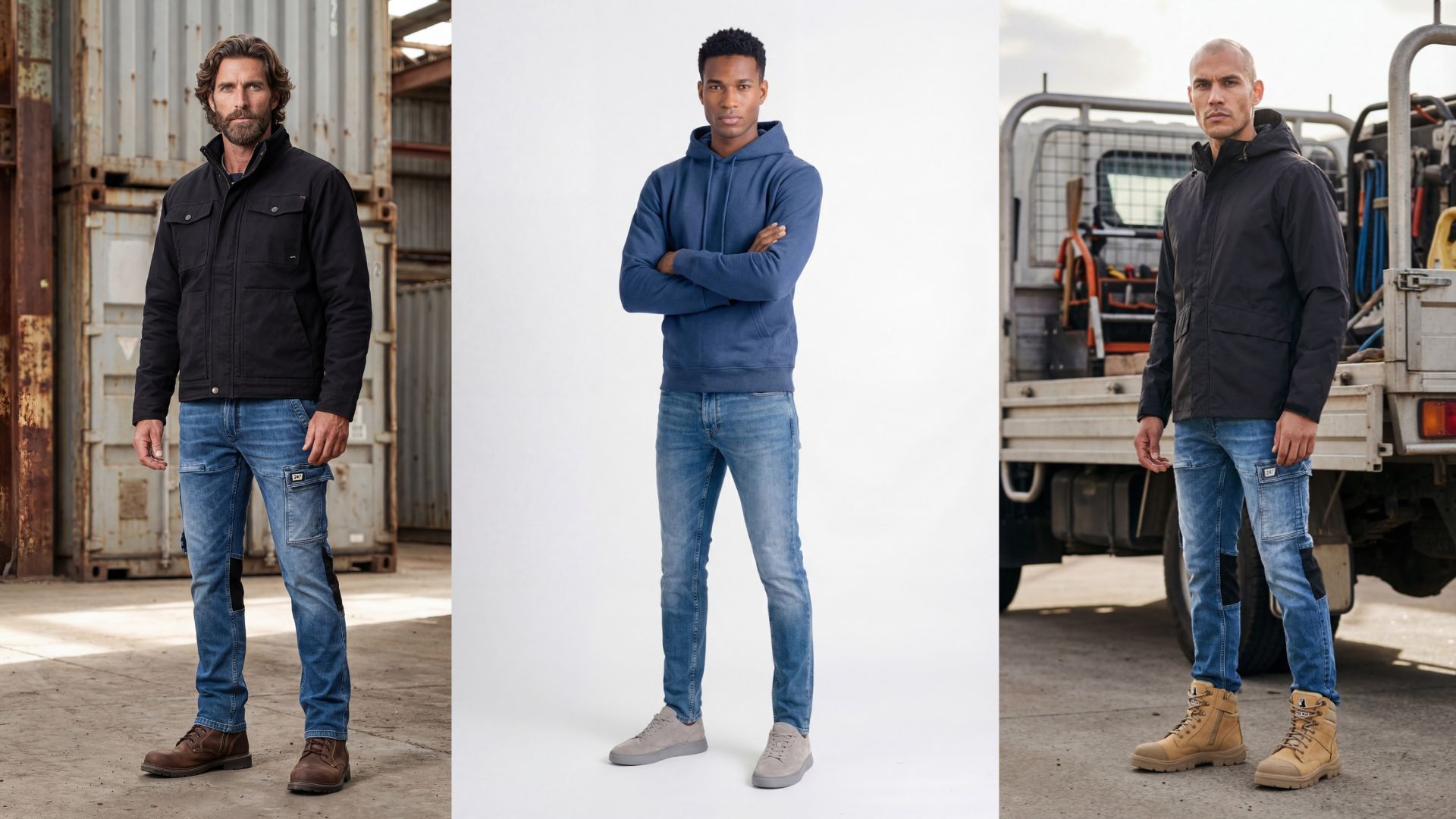
AI-generated product photos accelerate content production at 247Jeans
Situation at a glance: from e-commerce photoshoot to virtual photoshoot
247Jeans wanted to keep up with their growing content needs without drowning in planning, costs, and model dependency. To effectively showcase the range, content is necessary: product photos on models, mood images per color, and hero images for category pages. Traditional shoots remain a challenge.
The switch to AI product and mood photography provided a solution. With virtual models, they could iterate faster, produce more variants, and immediately test which visuals convert better. For 247Jeans, this meant: less lead time from concept to live content, no agenda friction with photographers and models, and instant A/B testing capabilities for CRO optimization.
Where the benefits were: speed, variation, and scalable content
The biggest advantages lay in three areas. First: time. A traditional shoot for one collection took weeks from planning to post-processing. With AI photoshoots, the same assets were generated in days. Second: variation. You can effortlessly create clothing photos with AI in multiple poses, backgrounds, and body types without extra model costs.
Third: scalability. For fashion AI images, you don't pay extra set costs for multiple items. That saves a lot of money.
The effect: 247Jeans could respond faster to trends, run more content for ads, and get products live sooner. Before/after comparisons on the site showed that AI-generated models were hardly distinguishable from real shoots.
The challenge and goals: consistent clothing photos without studio bottlenecks
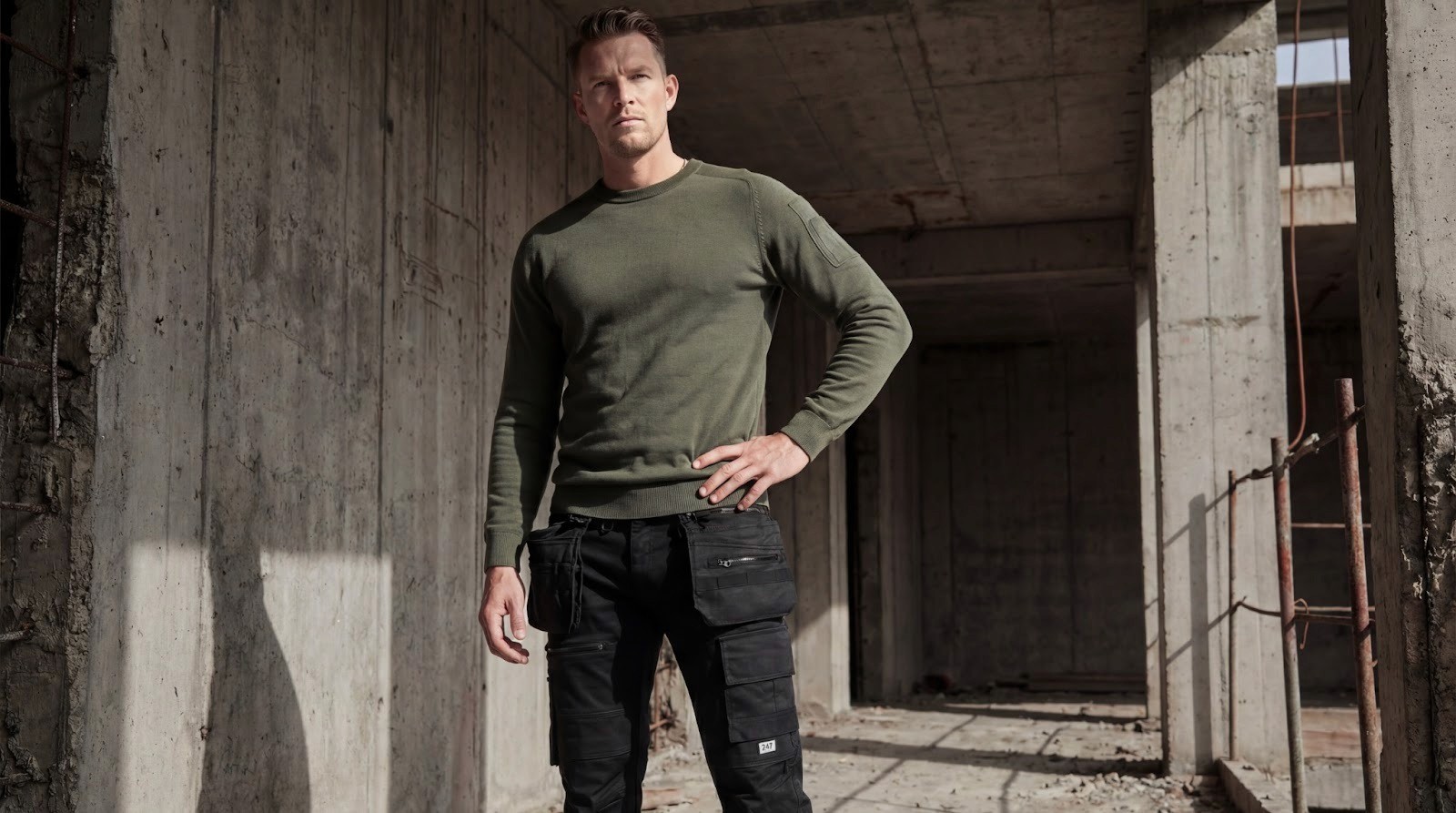
AI-driven photoshoot for 247Jeans.
The challenge: why traditional shoots no longer scaled
Organizing a photoshoot is time-consuming. Even though 247Jeans had its own studio for shoots, it still took an enormous amount of time.
Additionally, 247Jeans lacked visual proof on product pages. Customers wanted to see different people and poses to assess fit and shape. This requires a lot of imagery, but physical shoots per size/fit variant were simply too costly. AI offered the scalability to solve this problem.
The goals: measurable targets for time, cost, and conversion
247Jeans formulated concrete targets. They aimed to shorten the time-to-market by 50%, reduce costs per item, and be able to generate at least three variants per product (color, pose, background) within one day. They also set conversion goals: higher CTR on ads and better conversion on product pages through more context and fit perception.
The ROI framework was clear: saved shoot costs plus faster go-live (thus more sales days) must weigh more heavily than the costs of traditional shoots. You can adopt this framework by benchmarking fixed and variable costs per SKU against your current shoot workflow.
The approach and solution: how the AI photoshoot workflow worked at 247Jeans
Steps 1-3: from product image to model in AI photo (workflow)
Step 1: input and preparation. 247Jeans selected high-resolution product photos of each pair of jeans, defined a consistent brand style (neutral background, consistent lighting, crop at hip-leg), and created a style guide for outputs. This guide defined tone, color balance, and minimum requirements for product truth.
Step 2: generation. Using AI clothing model technology, they placed the jeans on virtual mannequins. Variation in poses (standing, sitting, walking), body types, and settings (studio, workplace, casual) was introduced through prompt variations. By maintaining model consistency (the same facial features), the look remained recognizable. The camera position can also be set very precisely to generate consistent images.
Step 3: Post-processing and QA. AI image editing refined details: edge alignment, texture reflection, shadows, and brand logos. Quality checks focused on product truth: is the washing correct? Are the stitches accurate? Gideon exported the approved assets directly in webshop and advertisement formats, ready for upload.
Tools and tactics: Replicate, prompt engineering, and AI image editing
247Jeans focused on an efficient tool: Sero fashion. The interface is intuitive; you start by setting up your brand style within Sero Fashion. Then, you generate models based on existing models or a prompt. Finally, you add the clothing as singles or collections and can create the shoot.
Prompt engineering is hardly needed anymore. The 247Jeans structure: fixed (generated) models, lighting (natural daylight, studio key light), background (white seamless, concrete urban), and camera angle (frontal mid shot, 3/4 view).
The review flow consisted of a checklist: color match with original, correct stitches, no logo distortion, consistent shadow, and natural model pose. Through this systematic approach, 247Jeans was able to produce dozens of product images per day.
The results: faster live, lower costs, and more test variants
The results: which metrics you should use
Best practices you can replicate immediately: work with reusable templates per fit type (skinny fit, slim fit, regular fit). Build a prompt library so you don't have to experiment every time. Establish a 'do not violate' checklist for product truth, so QA proceeds quickly and consistently.
Gideon intends to further develop the approach. Next steps: expanding to more body types and poses to increase inclusivity, seasonal settings (summer outdoor, winter studio) for campaigns, and even faster content production by further automating workflows. The hybrid model remains for now: AI for bulk and variants, real shoots for hero campaigns and special lookbook content.
Want to get started yourself? Schedule a demo with Sero Fashion or request a workflow audit to discover where AI can speed up your content production.
Frequently Asked Questions
How do you create an AI photoshoot for clothing?
Upload a high-resolution product photo, use an AI model to place clothing on a virtual model, and refine with prompt engineering and image editing. Create a style guide for consistency.
What is the best AI tool for clothing photos and fashion models?
The Replicate platform provides access to powerful generative AI image models. Combine this with ChatGPT for prompt iterations and a QA flow to ensure product truth.
How do you place clothing on a model with AI without it looking 'fake'?
Focus on high input quality, use negative prompts to avoid artifacts, and retouch details like shadows and texture. A good style guide and consistent QA are essential.
Can AI replace a full photoshoot for a webshop?
For many SKUs and variants, yes. 247Jeans uses a hybrid model: AI for bulk and quick updates, real shoots for hero content and special campaigns where emotion and storytelling are central.
Conclusion
The case of 247Jeans proves that a smart AI photo shoot workflow delivers concrete results: faster article content, more test variants, and better manageable costs. The success factors: high input quality, reusable prompt templates, strict QA on product truth, and clear ROI measurements.
Want to take this step yourself? Have your current content flow scanned for AI opportunities or schedule a demo with Sero Fashion to discover how your brand can benefit from virtual photo shoots. More test variants, shorter lead times, and scalability are within reach.
In a maximum of three quarters of an hour, you will get a complete picture: from platforms, integrations, and pricing to onboarding and ROI. All questions will receive a clear answer.
Get in-depth answers to all your questions
See concrete examples and live demos of the tools
Discover case studies from your sector